

Milk & Honey--and Blintzes
Milk & Honey--and Blintzes
Jewish holiday of Shavuot puts the spotlight on dairy foods
One Jewish holiday that was never really celebrated in my home when I was growing up is Shavuot, which in 2020 was observed at the end of May.
It celebrates a seminal event for the Jewish people—the giving of the Ten Commandments on Mount Sinai and of the Torah, our most sacred text. But perhaps because there was no big family feast, no particular songs and no gifts or games associated with it—at least in our household—it didn’t hold a lot of appeal for parents like mine who were trying to interest their kids in their religious heritage.
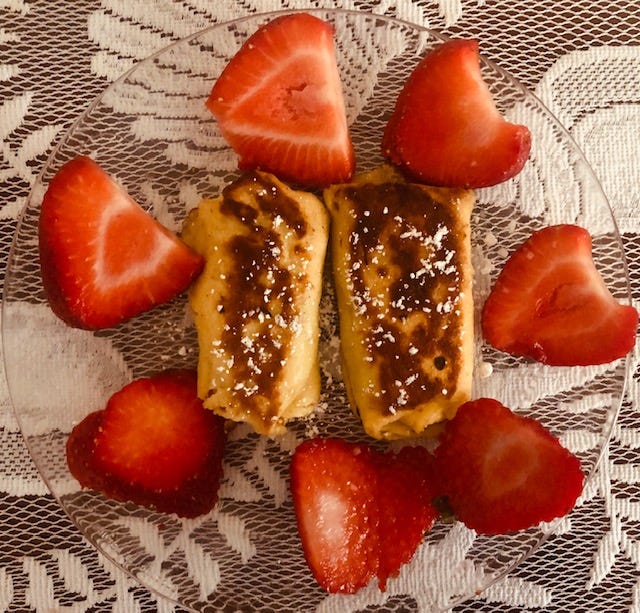
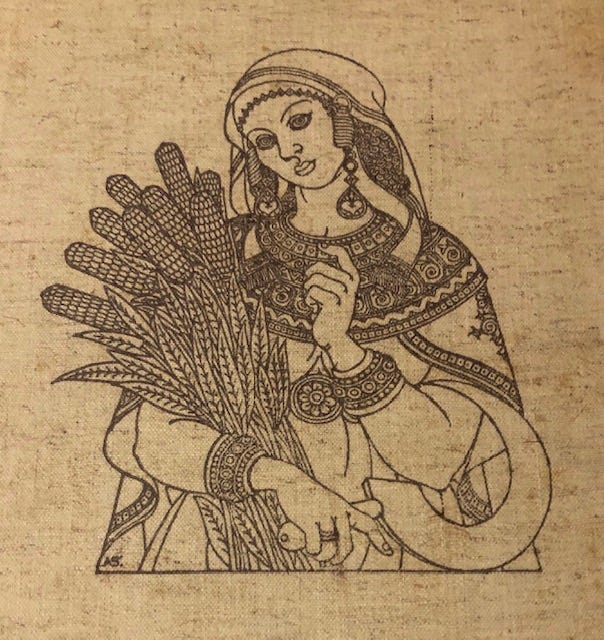
But this year, as an adult in quarantine hungry for connection, whether through family, friends, faith or food, I learned that it’s customary to read The Book of Ruth on this holiday—a meaningful tie for me as I’m named for this biblical heroine who so loved her mother-in-law Naomi that even after her husband, Naomi’s son, died, Ruth clung to her, adopted her religion, left her home, married one of Naomi’s kinsmen, and became the great grandmother of the famed King David.
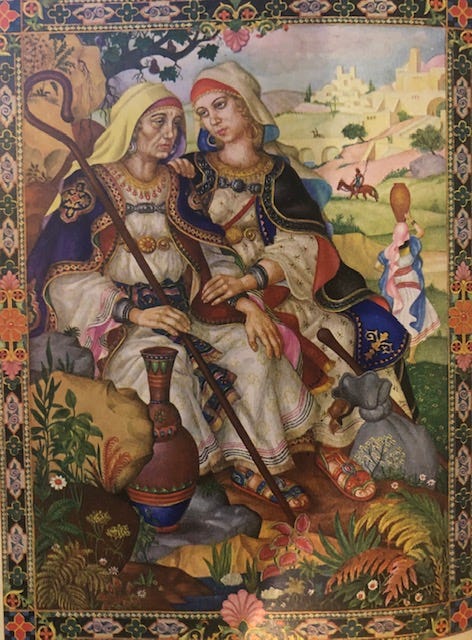
I received a copy of The Book of Ruth on my first birthday from my grandmother. It is illustrated by the Polish-Jewish artist Arthur Szyk.
In her preface to the beautiful edition I have, Mary Ellen Chase wrote that the simple story had a profound moral message, “that human love is able to bridge the shallow differences of nationality, and that true religion is a matter of heart and not of race”—truly a message that speaks to our time too.
It’s the custom on Shavuot to eat dairy foods. In The Jewish Holiday Kitchen, writer Joan Nathan explains the dairy connection as one based in nature: “Churning and cheesemaking are common features of spring harvest festivals the world over, when goats, sheep, and cows begin to graze more and thus produce more milk.” Also, she points out, the Torah, central to this holiday, is compared to milk and honey in the Song of Songs.
Among the most popular dairy dishes associated with the holiday is cheesecake, which my mother often made. Hers was a molded marvel of creamy perfection usually marred by a slight crack down the middle that she covered with berries. I have no memory of another iconic dairy dish, blintzes, showing up on our table, though I’m fairly sure they did, probably topped with a dollop of sour cream and jam.
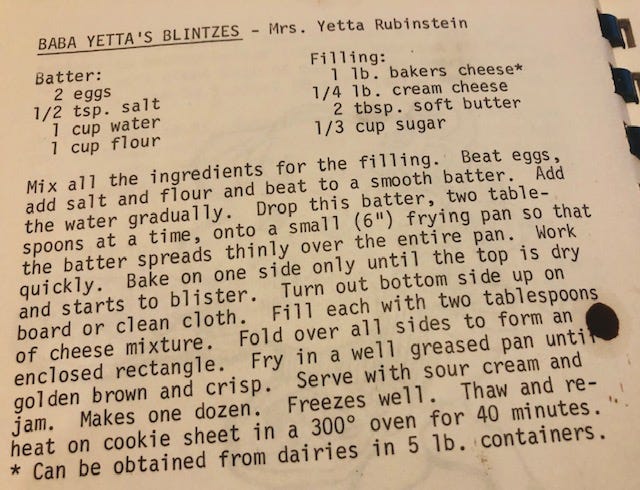
This recipe is from a 1969 collection from a Jewish women’s group to which my mother belonged. Drained cottage cheese or farmer’s cheese could be subbed for baker’s cheese.
When I decided to try my hand at making blintzes, I picked through a shelf full of Jewish cookbooks, including Nathan’s Holiday Kitchen; a spiral-bound collection with a red cover titled “Blast Off With Blintzes,” dating from 1969; and my sentimental favorite, The Art of Jewish Cooking by Jennie Grossinger, the first Jewish cookbook I ever purchased. Recipes in this book were for dishes served at the famed Grossinger’s Catskill Resort Hotel that inspired the film Dirty Dancing and closed in 1986.
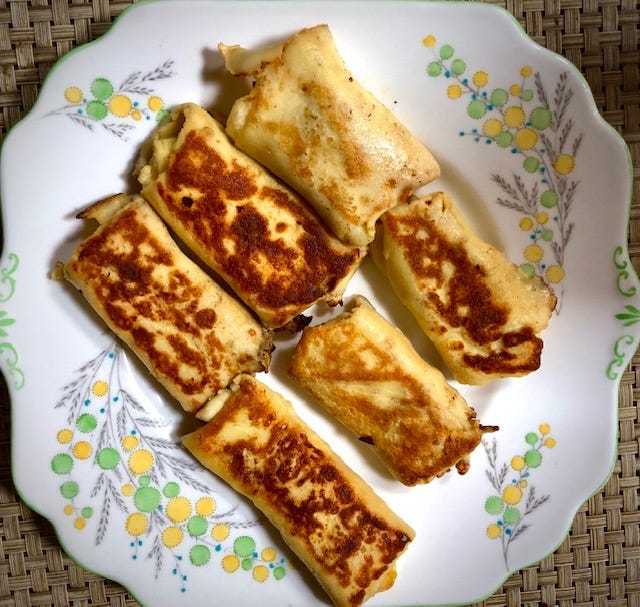
I went with the Grossinger’s recipe, which is also in the Nathan cookbook. The pages are yellowed and the directions are not very detailed, which it leaves some of the adventure in cooking—you might actually have to go figure it out for yourself!
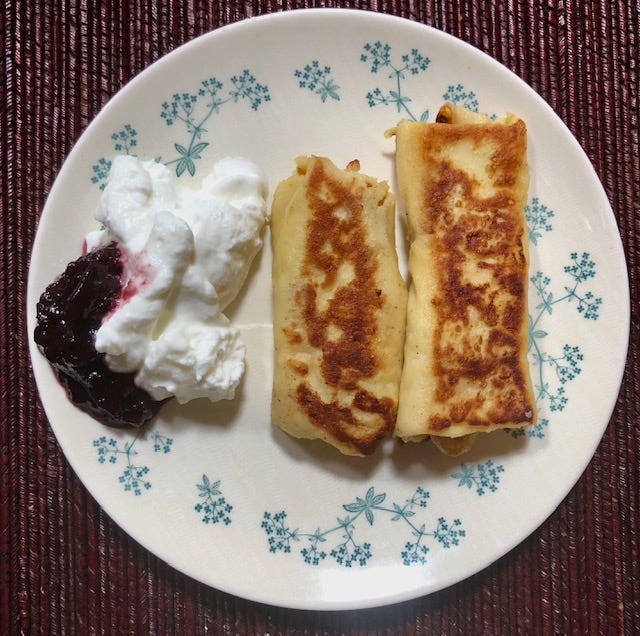
One thing that wasn’t clear at first was that you only fry one side of the pancake before filling it, fried side in. The pancakes are rolled over the filling—with pale side out, tucking top and bottom ends in first, then rolling sideways—to be fried again (or baked) later. If you make a mistake, and leave the fried side out, as I did, your pancakes may look rather well done. If you don’t tuck well, the filling may spill out. However, as I discovered while eating my mistakes, they’ll still be delicious—which is the point!
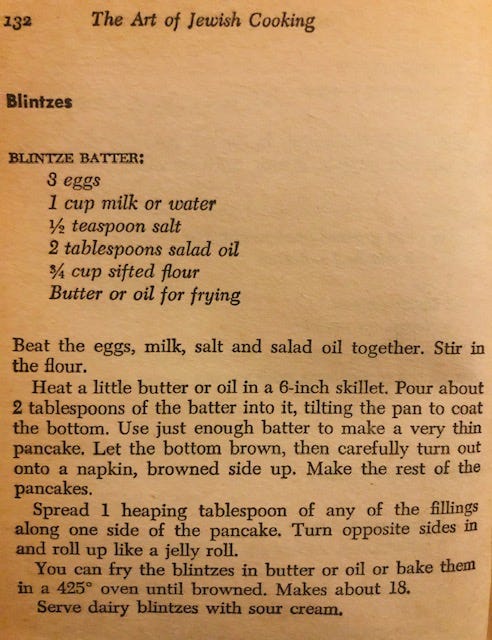
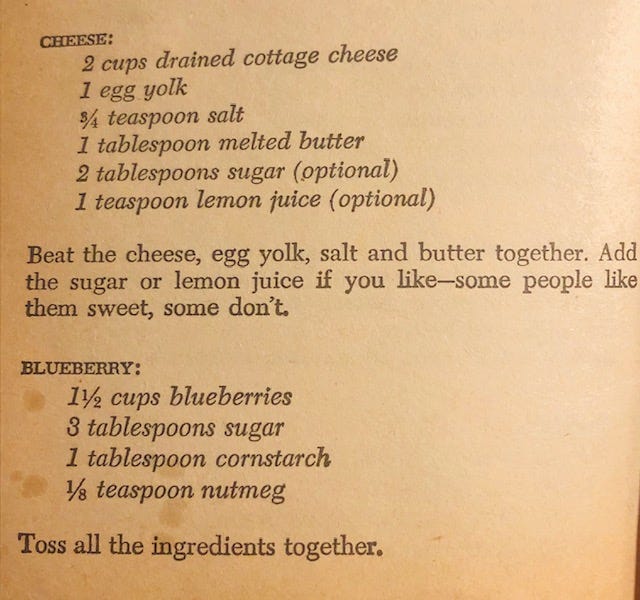
As for fillings, Grossinger offered five varieties: apple, vegetable, meat, cheese and blueberry. The meat and vegetable didn’t hold much appeal, but I tried the last two, with mixed results. The blueberries—a large organic variety—tore the delicate crepe-like pancake apart, while the cheese turned out well, though my shaping skills will take more practice. Next time I’ll try smaller blueberries—or a different filling altogether. Here are the two filling recipes:
Of course, there are many more modern blintz recipes and ones that offer lessons on technique that I probably should have checked out before making mine. One that looks delicious and includes a lot of detailed directions is from Tori Avey. It uses a mixture of ricotta and cream cheese in the filling, plus vanilla and an optional strawberry topping. She also suggests a food processor, blender or mixer to cut down on the manual labor.
But in this moment when I have extra time on my hands, I’m channeling earlier eras—even biblical ones—choosing to take the long road rather than a shortcut. The small details of cooking are a welcome distraction from the much larger issues that make me feel alternately helpless and overwhelmed with despair. I even opted to make my own farmer’s cheese instead of taking a special trip to a Jewish market in search of this ingredient. (Click here for the farmer’s cheese recipe.) It’s easier than you’d imagine—a matter of boiling milk, adding a curdling agent (white vinegar), and straining through a cheesecloth. It came out well, although I would cut the salt in half.
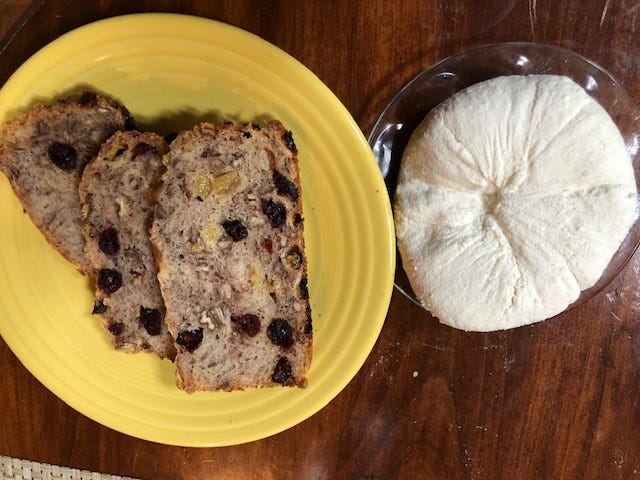
Homemade farmers cheese with No-Knead Harvest Bread from a King Arthur recipe.
I used a little of the cheese on some bread I made with cranberries, pecans and golden raisins. Making bread is another satisfying distraction. It’s also delicious and seems to make everyone happy—at least momentarily! I think even the biblical Ruth would approve.
Thanks for reading and listening to Ruth Talks Food. If you enjoyed this edition, please subscribe and share it with a friend. You can also leave a comment on this blog or on Twitter @Ruthtalksfood. See you in the kitchen!
To hear a podcast version of this episode, please click on the icon below.
