
A Pause for Passover
It's my favorite holiday and deeply personal, especially now with anti-immigrant sentiment ramping up, along with gas prices. Still, we love a celebration--and always save room for dessert!
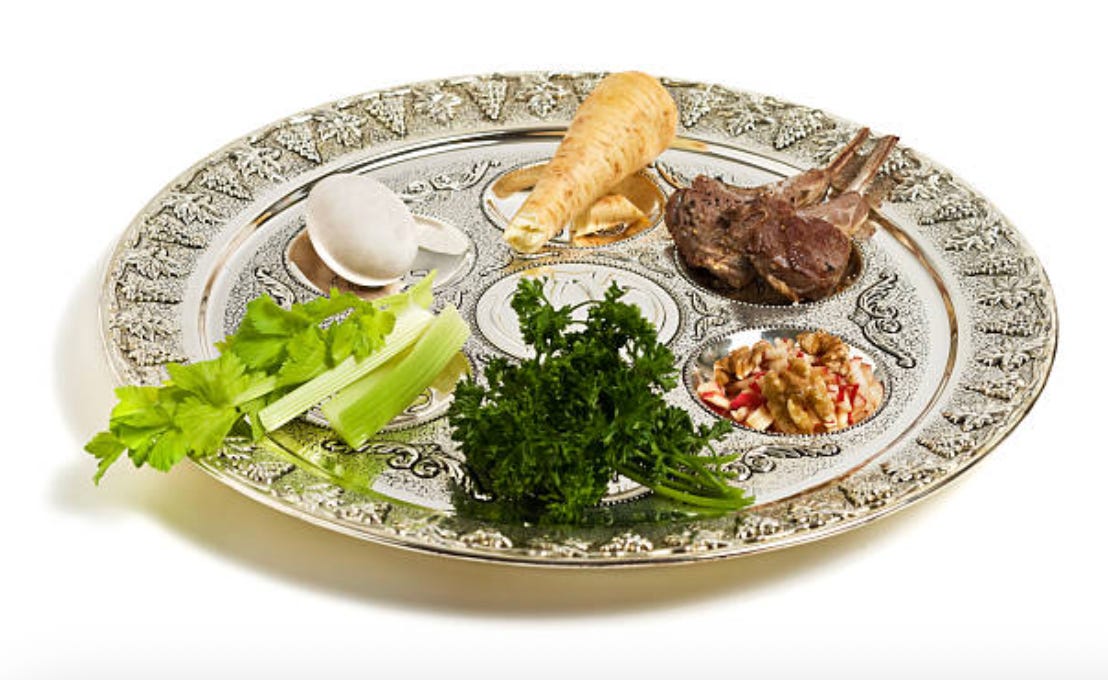
Passover begins today, April 1, at sundown. Yes, it’s April Fools’ Day—and you’re welcome to laugh. The joke’s on me actually. I’m really late with this post. Your Seder may be already underway—or over—if you’re celebrating! But luckily Passover (also called Pesach, with a gutteral “h” sound at the end like Bach) is another Jewish holiday that, like Hanukkah, lasts for eight days and nights, so there are more chances to read this—or skip to the end where I talk recipes!
Passover commemorates an event that is key to the Book of Exodus, the Israelites’ liberation from slavery in Egypt, a foundational story of the Jewish people. While some scholars find no evidence that the Jews were ever slaves in Egypt, others cite historical facts that support at least some portion of the story. In the words of George and Ira Gershwin’s popular song from the opera Porgy and Bess (which incidentally is based on a tale set in Charleston, the city we just visited and the subject of last week’s post), we all know the facts in the Bible “ain’t necessarily so.” But still, the story and the holiday at which we retell it every year have lasted for more than 3,000 years! That has to count for something!
In my own life, not a year has passed that we haven’t celebrated Passover, even though lately, the gatherings have become much smaller as people have moved on or passed away. When I was young, it was a joyous occasion at which our extended family took to heart one of the core requirements of the Haggadah (the little book we read that guides us through the prayers, songs, symbols [mostly food!] and meaning of the Seder) the edict that “in every generation, a person must see himself (or herself) as if he (or she!) had come out of Egypt.”
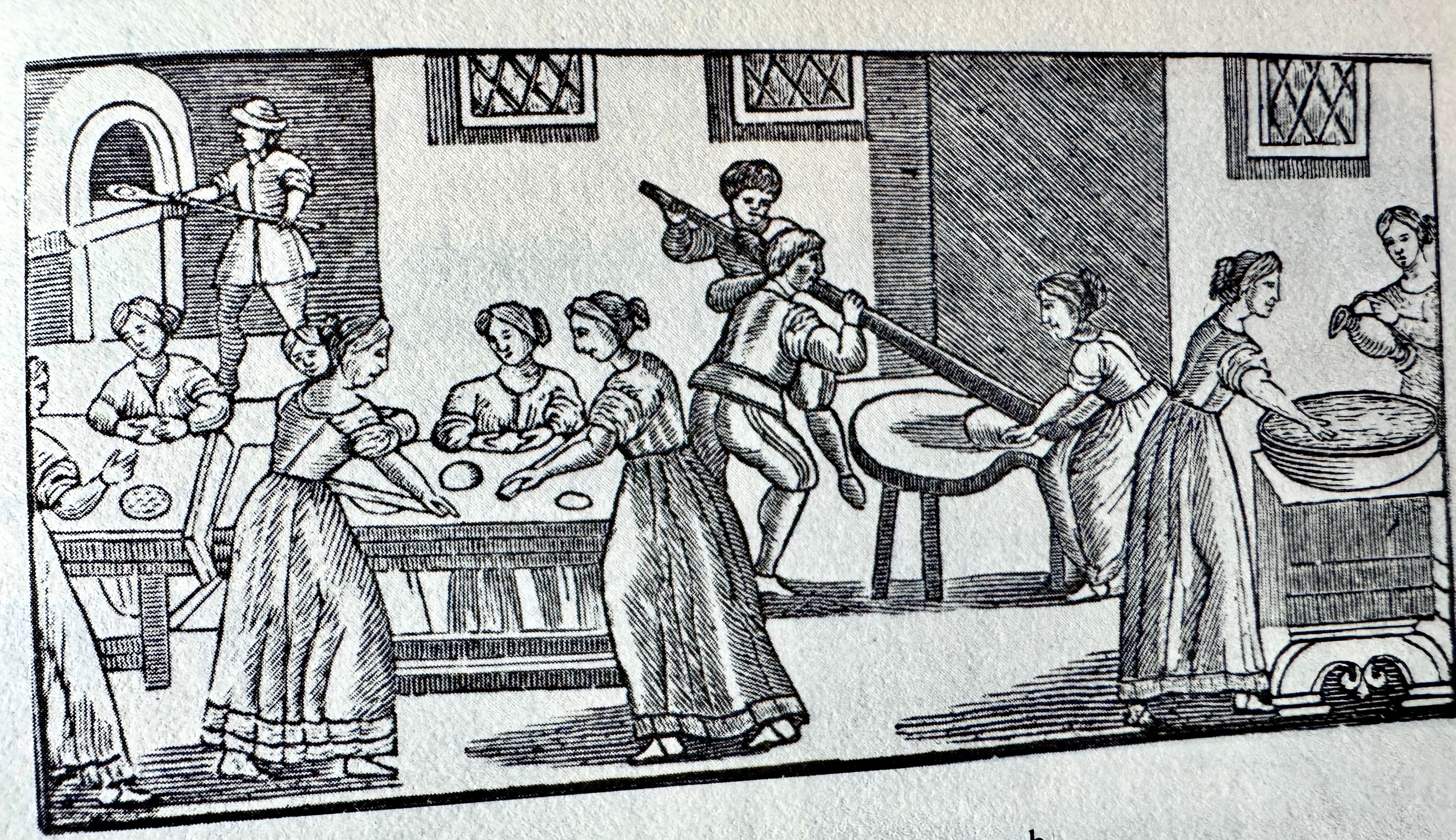
On a deeper level, we are invited to consider what are the things that enslave us and from which we seek liberation, whether it be drugs or food, a job or relationship or perhaps our own emotions, prejudices or habits—or, looking beyond ourselves, a cruel and incompetent leader (a modern-day pharoah or president perhaps?).
Another core message of the Seder is the biblical injunction to welcome and empathize with the stranger: “for you know the feelings of the stranger, having yourselves been strangers in the land of Egypt.” (Exodus 23:9)
This last was almost literally true for our family as my grandparents and their children arrived in the U.S. after escaping from Nazi Germany in 1938, with my father, mother and two older brothers coming a decade later from Scotland, my mother’s birthplace.
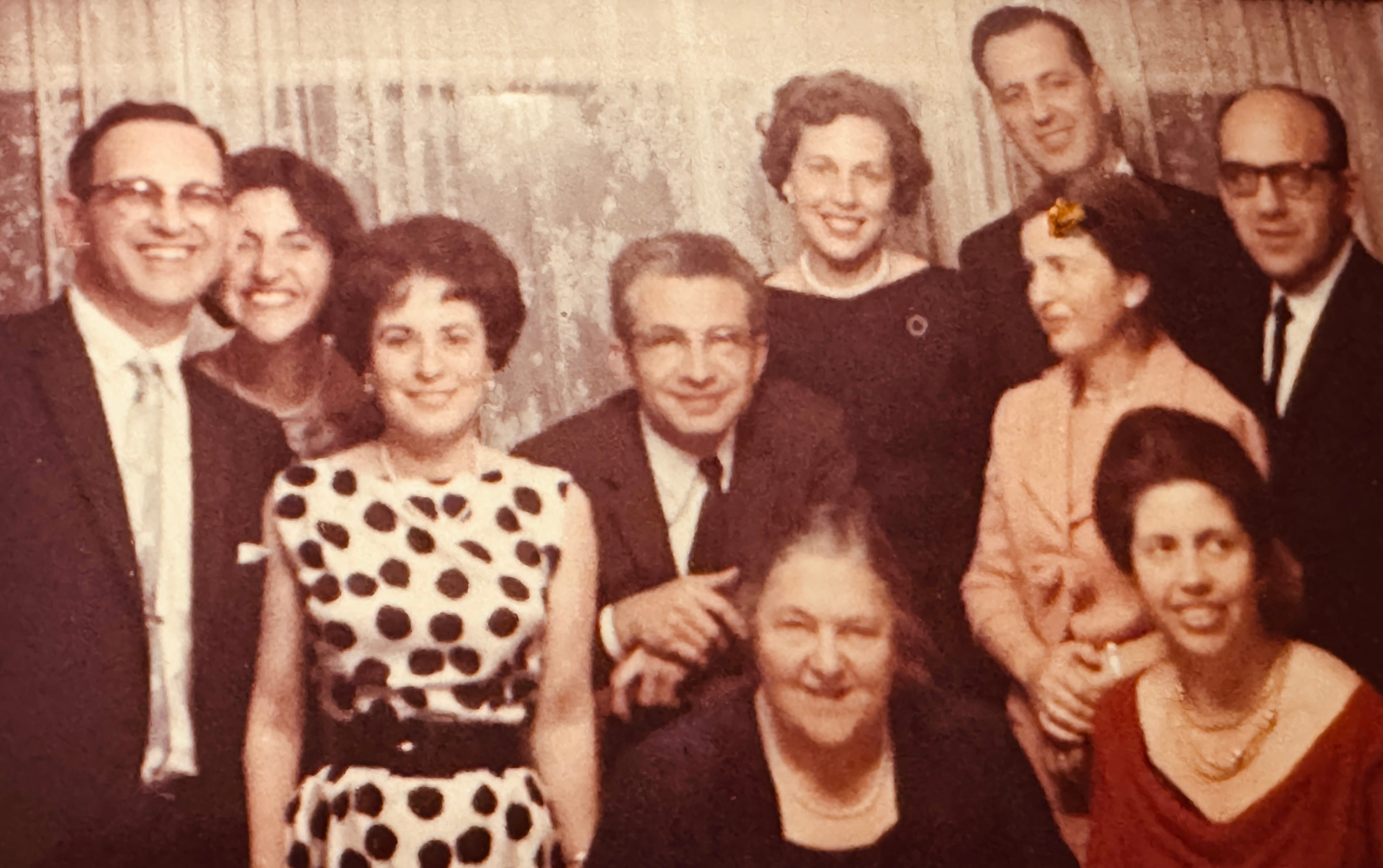
That close escape that made our life in America possible was always the background story that informed our Seders—so, for the grandparents, aunts and uncles who had actually endured that transition and survived, and for the next generation—we 18 grandchildren who were the product of their survival—it felt very personal. If not for their courage and foresight, we wouldn’t be here.
Here’s a piece I wrote about this a few years ago:

In 2026, there are far fewer of us—including the loss last December of my second cousin Ursula, who was the last link with that immigrant past. She shared some of her thoughts about the deep meaning that Passover held for her in the post above. I also wrote about her recipe for Tzwechkenkuchen—plum tart—in another story that you can find here. Though the tart isn’t kosher for Passover, it’s delicious and a family favorite!
Below is a photo I took of Ursula with her late sister Barbara several years back.

She and her three siblings and their parents immigrated to America from Germany at about the same time as my grandparents and aunts and uncles. Ursula was only 5 and became, along with her sister and two brothers, proud and productive American citizens—as did the members of my family.
They were the lucky ones, because the doors to this country swung closed pretty quickly against the tide of Jewish refugees seeking entry. Hundreds of thousands who wished to come here were forced to emigrate elsewhere if they were lucky enough to find a host country (which many couldn’t) or remain in Europe to face the war unleashed by Hitler and ultimately the horrors of the Holocaust.


Somehow it feels like déjà vu as we watch our country not only shutting its doors to immigrants once again, but also witness the ramping up of deportations and detention of those branded as criminals, though most have done little more than overstay their visas—if that! And then there are people, mostly U.S. citizens—who are lawfully and nonviolently protesting in the best American tradition that are being demonized, bullied, arrested—and even killed.


Luckily, more than 8 million of us showed up for peaceful No Kings Day rallies around the country last weekend, something you can be sure never happened in Nazi Germany. Eric Estrin, a former television writer/producer and now Substack blogger, was one of them and was inspired to write a witty take on the event tied to Passover: “Let my people go. Again: 10 new plagues for a modern Seder,” casting the president as our new Pharaoh. It includes a new verse for a popular Passover song, “Go Down Moses.”
“With Donald as our president,
Let my people go
Our future’s bleak, our money’s spent,
Let my people go
Go out, voters
Hold signs and sing your chants
Tell old Donald,
Let my people go.”
For a much needed lift, listen to Louis Armstrong’s fantastic take on this old African American spiritual.
Dayenu! Let’s eat!
That means enough already (and it’s a Passover song too!). This holiday isn’t only about soul-searching and lamenting about politics and the state of the world; thankfully, it’s also about family, friends—and food, of course. And the meal is always a challenge and an adventure.
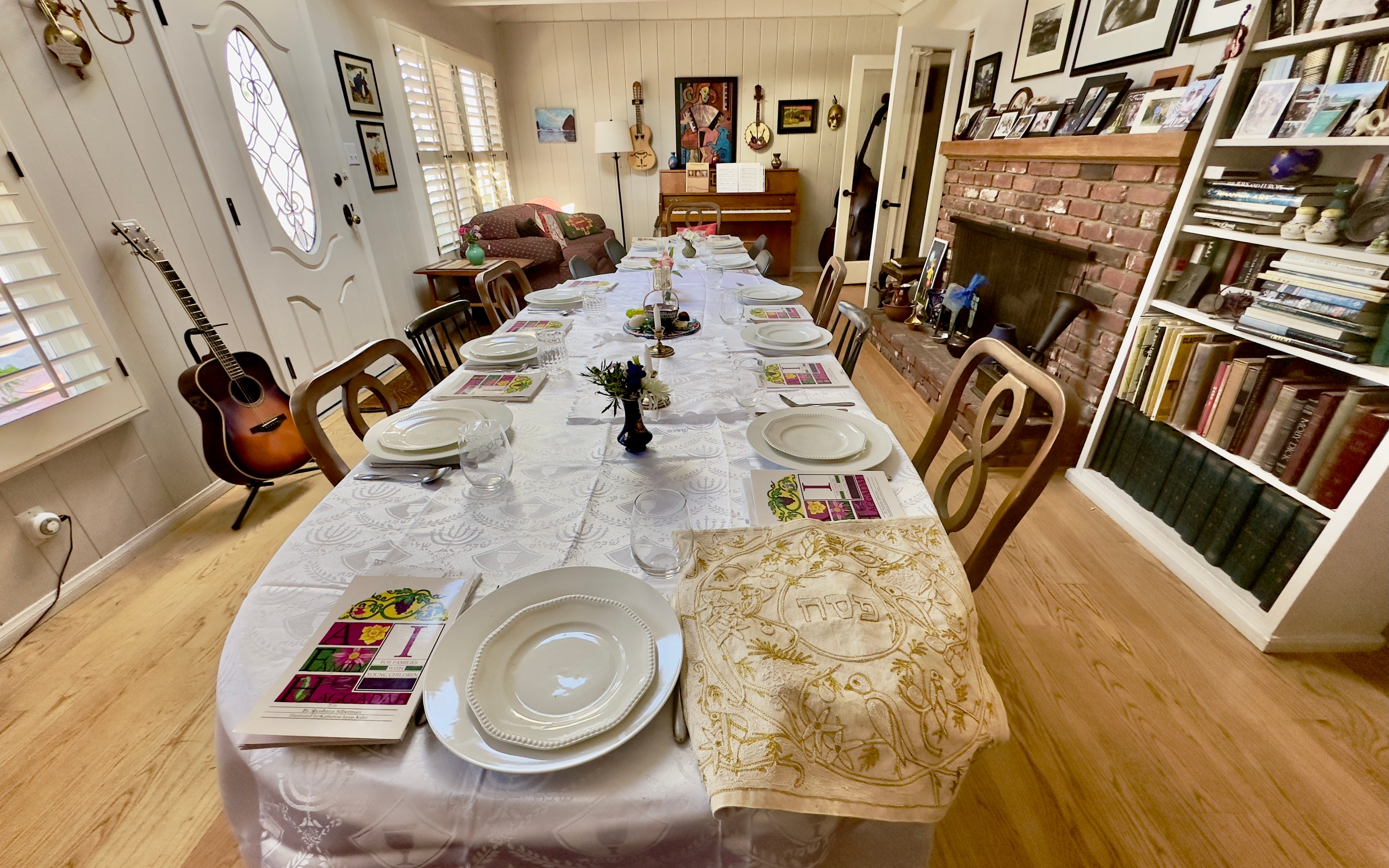
Last year we hosted the Seder at our house, and though I loved it, it really is quite a lot of work. I wrote about it in a post that also included a recipe for matzo ball soup from the great Joan Nathan, who has long been my Jewish cooking inspiration. This year, I’m enjoying the luxury of a celebrating at other peoples’ homes (thank you, Tina and Andy, Marla and Bob!). I volunteered to bring dessert—always my favorite thing to make anyway.
But Passover desserts can be a bit tricky. All those ingredients that you’re not supposed to have in your kitchen during the holiday—flour in particular, but yeast is definitely verboten, and while baking powder and baking soda can be used, they usually require Kosher for Passover certification. And then if you happen to have people at the table who are dairy- or gluten free—or vegan—that adds yet another layer. Add to that nut allergies and you’ve got more issues because many Passover desserts substitute nut flours for wheat flour. So by then you might be tearing your hair out and saying, “Maybe those Manischewitz macaroons aren’t so bad after all!”


But if you’re a person who actually enjoys a challenge when it comes to food (and especially if you’re not making the entire Seder meal and have time to be creative!), this might turn out to be kind of fun.


And that’s how it is with me. So what did I make? After enjoying several slices of key lime pie on our trip through the South, I couldn’t get this tart, creamy not-too-sweet pie out of my mind. It’s usually made with a graham cracker crust, but graham crackers include wheat flour, a no-no at Passover.
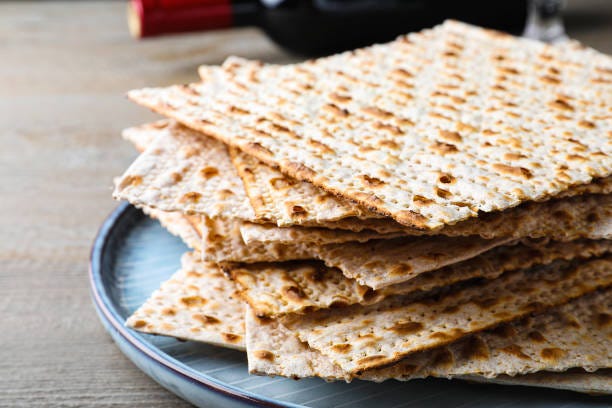
Interestingly enough, matzo, matzo meal and other kosher-for-Pesach products are usually made with wheat flour. But the wheat is handled in a special way: it must be prepared and baked in less than 18 minutes. That’s the amount of time that Jewish law specifies that it takes for flour to ferment—or rise, which isn’t allowed on Passover. Why? Because when the Israelites were fleeing Egypt, they were in too much of a hurry to let the dough rise—so voilà, we eat matzo for eight days! For some it’s torture. I, however, can’t get enough! Here’s a post in which I talk about some of the ways I enjoy it.

Anyway, about that key lime pie: I found a recipe on King Arthur Baking Co. and adapted it. After Passover I hope to make it again with the traditional graham cracker crust. I also think this pie would be a great choice for Easter!


To adapt the crust for a single-crust 9-inch pie, I checked out pie maven and fellow Substacker Kate McDermott’s recipe for Gluten-Free Nutty No-Bake Crust in her book, Art of the Pie. Her all-nut crust would work as written for Passover, but I worried that it might not hold together with a baked filling, so I added some matzo meal.
Instead of 1 cup each of almond meal and hazelnut meal, I ground enough roasted sliced almonds and roasted pecans to make 1 1/2 cups nut meal total in a food processor. (You could easily sub other nut meals—Kate’s recipe calls for almond and hazelnut meals.)
I added to the nuts about 1/4 cup matzo cake meal and 1/4 cup matzo meal (you could use a half cup of one or the other—or just grind up enough matzo to make a half a cup).
I added 2 tablespoons of sugar and 1/4 teaspoon of salt.
Then I drizzled in 5 tablespoons of unsalted butter, melted. (Kate says you can use either salted or unsalted.)
Kate suggests mixing ingredients together with clean hands or a fork, but I got lazy and just mixed it all up in the food processor. (I think her method is probably better as it’s too easy to over-mix in a processor.)
As the dough seemed a little too wet and not quite sweet enough, I added another tablespoon of sugar and more matzo cake meal until it held together.
I patted the dough into a pyrex pie dish and then followed the King Arthur key lime pie recipe from there, baking the crust for 15 minutes in a 325°F oven, adding some unsweetened coconut flakes after about 10 minutes in (my idea, not KAB’s), then removing the baked shell, cooling it, then pouring in the filling.
After baking the filled pie for the required amount of time, I cooled it in the fridge, wrapped it tightly in plastic wrap and foil and froze it—to be gilded with whipped cream and served several days later!
*Notes:
I used Floribbean Key Lime Juice, which I purchased from King Arthur, but the recipe suggests you can use regular limes or fresh key limes, if you can find them.
Other than the matzo meal, I didn’t use products that were marked kosher for Passover, so if you’re strictly kosher, this might not be the dessert to choose. It also contains dairy (condensed milk), so if you’re serving meat at your meal, this wouldn’t work for those who are very observant—especially with a whipped cream topping.
On my list of Passover desserts still to come are: almond-walnut macaroons (another Joan Nathan recipe from her King Solomon’s Table cookbook), chocolate chip meringues and a flourless, dairy-free orange cake made with whole oranges and blanched almonds from Claudia Roden’s The Book of Jewish Food. It’s apparently a famous cake made with oranges that are boiled whole for 1 1/2 hours! Stay tuned for more pictures of these hopefully successful desserts and the final verdict on my Passover key lime pie!
Thanks for being here at this very busy and nerve-racking time. Wishing you the very happiest of holidays and a more peaceful, caring world in which to enjoy them.
See you soon,
Ruth
Funny you write that Pesach has a guttural “h” sound like in Bach. Because not too long ago a I observed a young woman see Bach written down and then without irony or any suggestion it was a joke, pronounce it bach, rhymes with watch. She’d never heard of him. It made me sad.
One huge hole in my life is that I've never been invited to celebrate a Passover Seder. Now I have you to thank for making me feel I have.